
WELCOME BONUS 300%
UP TO €2000 + 100
FREE SPINS
UP TO €2000 + 100
FREE SPINS
Home → Roulette
Roulette at Excitewin
How Long a Session May Last
Quantum Roulette at Playtech offers stakes from 0,10 EUR to 5.000 EUR with multipliers up to 500x. This high-variance structure extends session duration significantly compared to standard European Roulette which maintains a constant house edge of 2.70%. A player engaging with these multipliers faces extended variance that dictates longer play periods before bankroll depletion occurs.
Mega Fire Blaze Roulette Live also supports bets between 0,10 EUR and 5.000 EUR, featuring a bonus round with a maximum win cap of 10.000x the stake. The potential for such extreme payouts naturally elongates the playing session as players chase the Fire Blaze feature rather than settling for base game returns. This contrasts sharply with the predictable turnover rate of basic straight-up bets on a single-zero wheel.
Lightning Roulette by Evolution operates within the same 0,20 EUR to 5.000 EUR betting range but applies 50x-500x multipliers to only one to five numbers per spin. The rarity of these lightning strikes means most spins yield no significant return, thereby stretching the time required to meet any specific monetary target or simply exhaust a fixed budget allocation.
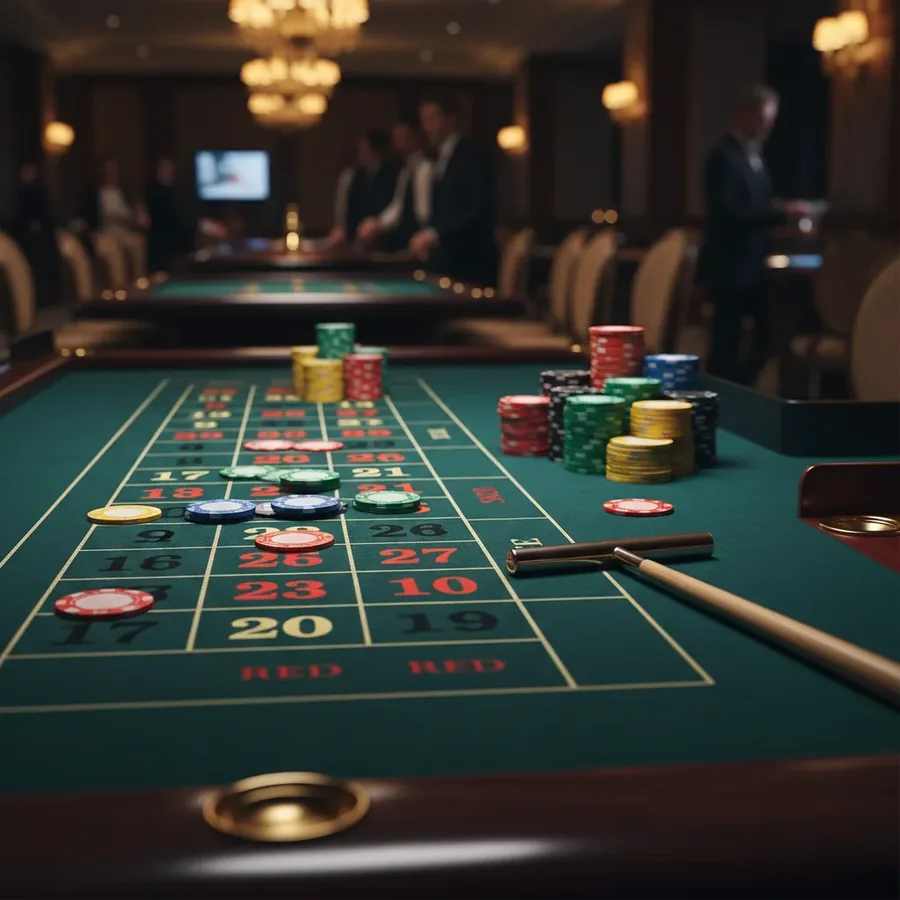
Betting Window Missed: What Happens to the Chip
In Quantum Roulette, if a player fails to place a bet within the designated window, the chip is lost immediately as the system locks all wagers simultaneously. Unlike traditional tables where delays might be forgiven, this digital format enforces strict timing constraints that result in an automatic forfeit of the stake for any late entry attempts. This mechanism ensures that every participant faces identical conditions regarding the start of each roulette spin cycle.
Mega Fire Blaze Roulette Live similarly requires all chips to be placed before the countdown concludes, with no option to add late bets after the dealer announces stop betting. Any chip remaining outside the valid betting zone is returned to the player's balance rather than being pushed to the table, preventing unauthorized participation in the current round. This rule protects the integrity of the game by ensuring all positions are set before the wheel begins its rotation.
Lightning Roulette follows the same protocol where missing the betting window results in the immediate loss of the intended wager without exception. Since the lightning numbers are randomly generated after betting closes, any attempt to place a bet afterward would be invalid against the predetermined outcome. Consequently, disciplined timing is essential to ensure every euro risked actually participates in the next spin event.
Check Table Limit Before First Progression Starts
The maximum stake for both Quantum Roulette and Mega Fire Blaze Roulette Live is capped at 5.000 EUR, which sets a hard ceiling for any progression strategy. Players employing systems like Martingale must verify their bankroll can sustain losses up to this limit without hitting the table maximum prematurely. Exceeding this boundary renders further doubling impossible, effectively breaking the progression logic and leaving the player exposed to unrecoverable deficits.
Lightning Roulette shares the identical 5.000 EUR upper limit for bets, requiring careful calculation before initiating any escalating bet sequence. If a player reaches the maximum allowed stake while attempting to recover previous losses, they cannot increase their wager further regardless of their remaining funds. This constraint forces a strategic pause, as the progression model collapses once the table limit intersects with the player's increasing financial requirements.
All three live tables enforce these strict boundaries to manage risk for both the operator and the participant. Understanding that 5.000 EUR is the absolute maximum exposure per spin allows for more realistic planning of long-term session goals. Ignoring this limit often leads to rapid bankroll exhaustion when the progression algorithm demands stakes beyond the permissible threshold.
Even Chances 1:1 on 18 Numbers
French Roulette with La Partage offers even money bets on Red/Black, Odd/Even, and Low/High with a favorable house edge of just 1.35%. When the ball lands on zero, half of the even chance stake is refunded, significantly reducing the long-term cost of playing these specific wagers. This rule applies exclusively to outside bets and does not extend to any internal number combinations placed on the layout.
American Roulette presents a much steeper challenge for even money players due to the presence of both zero and double zero sectors. The house edge for these bets rises to 5.26%, meaning the casino retains a larger portion of every euro wagered on red or black over time. This structural disadvantage makes European or French variants mathematically superior for players focusing solely on parity outcomes.
European Roulette sits between these extremes with a standard house edge of 2.70% on even money bets due to the single zero pocket. While there is no partial refund mechanism like La Partage, the absence of the double zero keeps costs lower than the American variant. Players seeking consistent returns should prefer tables offering the French ruleset to maximize the theoretical return percentage on these simple wagers.
How Long for 40x Wager with 10 Percent?
Table games contribute only 10 percent toward the wagering requirement of the 300 percent welcome bonus up to 2,000 EUR plus 100 free spins. To clear the full bonus amount of 2,000 EUR, a player must generate 40 times the bonus value, resulting in a total turnover target of 80,000 EUR. This high volume is necessary because only a fraction of every bet placed counts toward unlocking the withdrawal eligibility.
If a player wagers 100 EUR on Quantum Roulette, only 10 EUR is credited toward the 80,000 EUR goal, extending the time required to finish the task. Given the fast pace of live dealer games, generating this turnover demands thousands of spins across various titles. The low contribution rate effectively doubles the effort needed compared to slots that typically offer higher contribution percentages.
Using Mega Fire Blaze Roulette Live involves similar calculations where the 10 percent contribution rate remains constant regardless of the game's volatility. The 97.30 percent RTP suggests steady play, but the slow progress toward the 40x multiplier means sessions must be prolonged significantly. Players must account for this delay when planning their deposit strategy to ensure sufficient funds remain during the extended clearing period.
Roulette bet types at a glance
| Bet | Payout | Win Chance | Numbers Covered | House Edge |
|---|---|---|---|---|
| Roulette Französisch, innere Einsätze (La Partage gilt nicht) | Straight 35:1, Split 17:1, Street 11:1, Corner 8:1, Six Line 5:1, Dozen 2:1, Column 2:1 | 97.30% | Rad gleich (37 Sektoren), aber La Partage/En Prison gilt nicht für innere Einsätze – Edge bleibt europäisch | 2.70% |
| Roulette Französisch mit La Partage (gerade Chancen) | Rot/Schwarz 1:1 (bei 0 Rückerstattung 50%), Odd/Even 1:1, Low/High 1:1; Innere Einsätze ohne La Partage: Straight 35:1, Split 17:1, Street 11:1, Corner 8:1 | 98.65% | Bei 0 wird die Hälfte des Einsatzes auf gerade Chancen zurückerstattet (Rot/Schwarz, Pair/Impair, Manque/Passe). En Prison gibt denselben 1,35%. Regel gilt NUR für gleiche Einsätze | 1.35% |
| Roulette Amerikanisch (doppelte Null, 38 Sektoren) | Straight 35:1, Split 17:1, Street 11:1, Corner 8:1, Six Line 5:1, Dozen 2:1, Column 2:1, Rot/Schwarz 1:1 | 94.74% | 38 Sektoren (1–36 + 0 + 00); Auszahlungen wie beim europäischen Rad, aber der zusätzliche Sektor verdoppelt den Hausvorteil | 5.26% |
| Roulette Europäisch (einfache Null, 37 Sektoren) | Straight 35:1, Split 17:1, Street 11:1, Corner 8:1, Six Line 5:1, Dozen 2:1, Column 2:1, Rot/Schwarz 1:1, Odd/Even 1:1, 1-18/19-36 1:1 | 97.30% | 37 Sektoren (1–36 + 0); Auszahlungen wie für 36 Sektoren – daher konstanter Edge auf ALLE Wetten | 2.70% |
| Roulette Amerikanisch – Five Number Bet (0, 00, 1, 2, 3) | Five Number 6:1 (deckt 5 von 38 Sektoren) | 92.11% | Einzige Wette am amerikanischen Rad mit Edge über 5,26% – „Fallenwette“. Kein Äquivalent am europäischen Rad | 7.89% |
Lightning Roulette vs Classic Wheel: RTP Difference
The Quantum Roulette table operated by Playtech features multipliers reaching up to 500x, while its theoretical return remains at 97.30%. This percentage matches the standard European wheel configuration found in classic variants like Lightning Roulette by Evolution. Consequently, players face identical long-term mathematical expectations despite the added volatility from the quantum numbers.
Standard American Roulette offers a significantly lower RTP of 94.74% due to the presence of a double zero sector. The additional pocket increases the house edge to 5.26%, contrasting sharply with the 2.70% edge on single-zero wheels. This difference means players lose money faster on the American variant compared to the European or Lightning versions.
The Five Number Bet on the American wheel presents an even worse scenario with an RTP of only 92.11%. This specific wager covers five sectors but carries a house edge of 7.89%, making it the worst option available. Players avoiding this trap maintain better bankroll longevity than those chasing high payouts on this particular bet.
Even Chances vs Straight: Variance Comparison
Straight bets on any roulette wheel pay out at odds of 35:1 for a successful prediction of a single number. This high payout structure creates significant variance, as wins occur less frequently than even-money wagers. Players must accept larger swings in their bankroll when focusing exclusively on these high-risk inside positions.
In contrast, outside bets such as Red/Black or Odd/Even pay out at simple 1:1 odds for winning chances. These wagers cover nearly half the wheel, resulting in much lower volatility and more consistent, smaller wins over time. The stability of these bets makes them suitable for players seeking longer session durations with reduced risk.
The French Roulette variant introduces La Partage rules for even-chance bets, refunding 50% of the stake if the ball lands on zero. This rule effectively halves the house edge to 1.35% for those specific wagers, compared to the standard 2.70% edge. Straight bets do not benefit from this protection, maintaining their original higher risk profile regardless of the zero outcome.
Wheel Speed and Ball Toss in Real Wheel
Mega Fire Blaze Roulette Live by Playtech utilizes a physical wheel setup that determines the base game mechanics before bonus triggers. The game allows stakes ranging from 0.10 EUR to 5,000 EUR per spin, accommodating various betting strategies. The physical nature of the wheel ensures transparent outcomes independent of software randomization algorithms used in digital games.
Lightning Roulette by Evolution combines a real croupier with digital overlays, featuring 37 sectors on a standard European-style wheel. Multipliers between 50x and 500x are applied to one to five numbers randomly selected before each spin. This hybrid approach merges the trust of live dealer play with the excitement of enhanced payout potential for lucky hits.
The Quantum Roulette table by Playtech also employs a real wheel mechanism alongside its unique multiplier system. Stakes range from 0.10 EUR to 5,000 EUR, matching the limits of other major live dealer titles. The combination of physical spinning and digital enhancements provides a distinct experience compared to purely virtual RNG-based roulette games found elsewhere.
Error: 10 Percent Contribution to Wagering Missed
Tischspiele contribute exactly 10 percent toward fulfilling the wagering requirements attached to the welcome bonus offer. This low contribution rate significantly extends the time needed to clear the bonus funds compared to slot games. Players relying on roulette to unlock withdrawals must place ten times the bonus amount in total bets to meet the condition.
The 300% welcome bonus up to €2,000 plus 100 free spins requires conversion through eligible games before cashout. Since roulette counts only 10 percent, a €1,000 bonus necessitates €10,000 in total roulette stakes to satisfy the requirement. This calculation demonstrates why table games are inefficient for clearing large bonus amounts quickly.
Players should compare this 10 percent contribution against the typical 100 percent weight assigned to slot machines by most operators. Using slots would allow clearing the same €1,000 bonus with just €1,000 in wagers instead of €10,000. Choosing roulette for wagering purposes therefore multiplies the required turnover volume by a factor of ten.
Which Bets Count Towards 10 Percent?
All roulette bets placed on tables like Lightning Roulette and Mega Fire Blaze Roulette count toward the 10 percent contribution limit. Whether placing a straight bet paying 35:1 or an even-chance bet paying 1:1, every wager reduces the remaining bonus requirement equally. The game provider, whether Playtech or Evolution, does not alter this contribution percentage based on the specific variant.
Inside bets such as splits, streets, and corners all fall under the same 10 percent contribution category for bonus clearance. A corner bet paying 8:1 contributes the same percentage toward wagering as a column bet paying 2:1. This uniformity ensures that strategic variations within roulette do not offer any advantage in meeting the bonus terms.
Even-chance wagers including Red/Black, Odd/Even, and High/Low are subject to the identical 10 percent contribution rule. These bets do not receive any special weighting or exemption from the standard table game contribution rate. Players must account for this limitation when planning their bonus strategy, as no roulette bet type offers faster clearance than another.
2.70 vs 5.26 Percent House Edge
The European Roulette variant features a single zero across 37 sectors, establishing a fixed house edge of 2.70% for all bet types including straight and split wagers. This mathematical advantage remains constant regardless of the payout ratio offered to the player on standard outside bets like red or black. The structural simplicity ensures that the casino retains exactly 2.70% of every euro wagered over the long term without variation.
In contrast, the American Roulette table introduces a double zero, expanding the wheel to 38 sectors and doubling the statistical disadvantage for players. This configuration results in a significantly higher house edge of 5.26%, which applies uniformly to all standard betting options available on the felt. Players choosing this version accept a nearly double cost per spin compared to their European counterparts due to the extra losing sector.
The Quantum Roulette live table from Playtech utilizes a European-style wheel with 37 sectors but introduces random multipliers that can reach up to 500x on winning bets. While the base game maintains the standard 2.70% house edge, these special multipliers temporarily alter the volatility and potential return for specific rounds. This hybrid model combines traditional odds with high-variance bonus mechanics, affecting the overall expected value during active multiplier events.
Error: Using Opposite Bets for Wagering Fulfillment
Tischspiele contribute only 10% toward the fulfillment of the 300% welcome bonus requirements, making them an inefficient choice for clearing the initial deposit funds. A 100 Euro wager on any roulette table counts as merely 10 Euros toward the total turnover target set by the operator's terms. This low contribution rate forces players to wager ten times more capital than they would on slots to achieve the same progress.
The La Partage rule in French Roulette refunds 50% of even-money bets when the ball lands on zero, effectively reducing the house edge to 1.35%. However, this refund mechanism does not accelerate the clearance of bonus money because the contribution percentage remains fixed at 10% for all table games. Players attempting to exploit this rule will find their bonus balance frozen until the slower table-game contribution threshold is met.
Using opposite bets such as covering both red and black simultaneously generates minimal net loss but fails to satisfy the wagering requirement efficiently due to the 10% contribution cap. Since each individual bet only adds a fraction of its value to the turnover counter, the time required to clear the bonus increases dramatically. This strategy often leads to significant erosion of the bankroll before the 40x wagering condition is ever reached.
What Doesn't Count: Red and Black Simultaneously
Placing bets on both red and black simultaneously covers 36 out of 37 sectors on the European wheel, leaving only the zero as a losing outcome for the combined stake. This approach minimizes variance but yields no profit because the payouts are capped at 1:1, resulting in a guaranteed loss equal to the zero sector's share. Such play is explicitly discouraged for bonus clearance as it wastes funds without generating meaningful turnover credit under the 10% contribution rule.
The Five Number Bet in American Roulette covers five sectors (0, 00, 1, 2, 3) but carries a steep house edge of 7.89%, making it the worst value option on the floor. This specific wager pays 6:1 but statistically returns less than any other bet type available on the 38-sector wheel. Including this bet in a strategy to clear bonuses accelerates bankroll depletion due to its exceptionally high mathematical disadvantage compared to standard options.
Even-money bets like red or black pay 1:1 but do not count fully toward the bonus turnover because table games only contribute 10% to the wagering requirement. Covering both colors simultaneously results in a net loss on every spin where zero appears, eroding the deposit without advancing the bonus release schedule. This tactic is ineffective for meeting the 40x wagering requirement attached to the 300% welcome bonus offer.
Why 5.26 Percent is Rarely Recommended
The American Roulette variant imposes a 5.26% house edge due to the presence of the double zero on the 38-sector wheel, which doubles the casino's advantage over the player. This high margin means that for every 100 Euros wagered, the player loses approximately 5.26 Euros on average, significantly faster than the 2.70% rate found elsewhere. Consequently, this format is rarely recommended for serious players seeking to maximize their playing time and potential returns.
Live tables such as Lightning Roulette from Evolution maintain the lower 2.70% house edge despite offering multipliers up to 500x on straight bets. These games use a European wheel with 37 sectors, ensuring that the base mathematical expectation remains favorable compared to the American alternative. Players are advised to stick to these versions to avoid the punitive 5.26% disadvantage inherent in the double-zero layout.
The Mega Fire Blaze Roulette Live table by Playtech also operates on a European wheel with a 2.70% house edge while offering a max win cap of 10,000x. This structure provides better long-term value than the American variant, which drains bankrolls twice as fast due to its higher edge. Avoiding the 5.26% games preserves capital for more strategic play within the constraints of the 10% table game contribution limit.
House Edge: What 2.70 Percent Actually Costs
A 2.70% house edge on European Roulette translates to a theoretical loss of 2.70 Euros for every 100 Euros wagered over a large sample of spins. When applied to the 10% contribution rate for table games, this edge impacts the bonus clearance process by requiring ten times the actual wager amount to be recorded. For a 100 Euro bonus with a 40x requirement, players must generate 4,000 Euros in turnover, costing them approximately 108 Euros in expected losses.
The Straight bet in European Roulette pays 35:1 but still falls under the 2.70% house edge calculation derived from the 37-sector wheel. This payout ratio is identical to the American version, yet the American game charges 5.26% due to the extra zero, making the European version mathematically superior. Players should prioritize straight bets only if seeking high variance, understanding that the underlying cost per spin remains tied to the 2.70% figure.
Table games contributing 10% toward the 300% welcome bonus mean that the 2.70% edge has a multiplied effect on the time required to unlock withdrawals. To clear a 2,000 Euro maximum bonus, a player must wager 80,000 Euros in total turnover, incurring an expected loss of roughly 2,160 Euros based on the 2.70% rate. This calculation highlights the true financial impact of the house edge when combined with restrictive contribution percentages.
Contact
Live - online chat
Banking





Providers








Excitewin Casino 2026